product
AI, Tokens, and New Inequalities: Who Will Really Be Able to Build the Next Revolution?
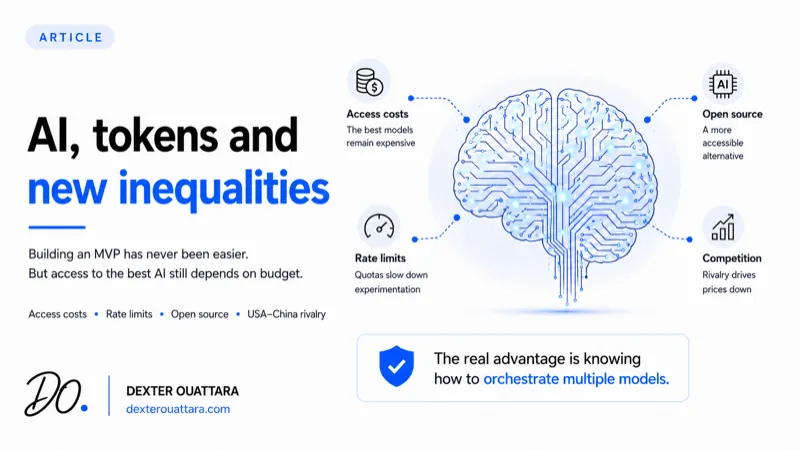
In the age of generative AI, autonomous agents, and AI-assisted coding tools, building an MVP has never seemed easier.
Today, an entrepreneur can go from an idea to a first working version in just a few days. A solo developer can prototype an application, generate an interface, connect an API, fix code, write documentation, and even prepare a pitch with the help of an AI model.
What used to require an entire technical team is now accessible to one motivated individual with a computer, an internet connection, and a good AI assistant.
On the surface, innovation has become more democratic.
But in reality, a new barrier is emerging.
It is no longer only called “technical skill.”
It is now called: tokens, rate limits, premium subscriptions, quotas, compute, API pricing, and access to frontier models.
The AI Paradox: More Accessible, Yet More Expensive
The first pieces of code generated by ChatGPT were often immature, verbose, and difficult to maintain.
Today, the most advanced models can produce much cleaner code, design product architectures, help debug, reason through complex systems, and support entire teams throughout their development cycles.
This is a revolution.
But this revolution has a cost.
To access the best models, users often have to pay $20, $100, or even $200 per month, depending on the platform and the use case. On top of that come API costs, usage limits, subscriptions to several tools at once, generation credits, research quotas, agent calls, specialized models, and tools for code, image, video, voice, or data analysis.
For a startup in California, where an engineer can earn more than $100,000 a year, these costs may seem reasonable.
But for a developer, freelancer, or young entrepreneur in Africa, India, Latin America, or other emerging markets, those same costs represent a real barrier.
And this is where the new inequality begins.
The New Tax on Performance
In the previous digital economy, the main barriers were access to capital, networks, talent, and markets.
In the new AI economy, another barrier has appeared: regular access to the best models.
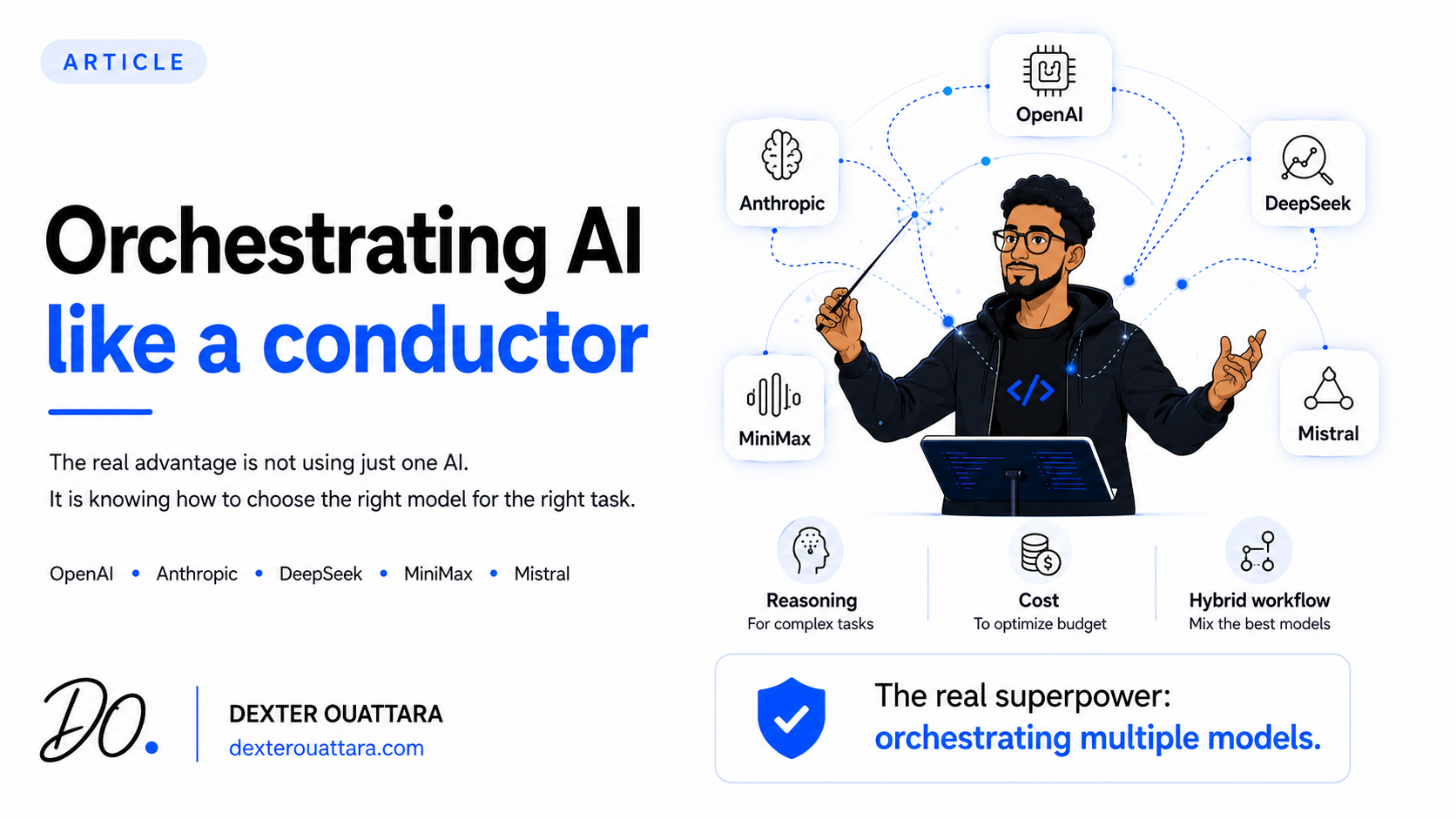
Those who can pay for multiple subscriptions, test several models, automate workflows, use advanced coding agents, and consume large amounts of tokens gain a significant advantage.
Those who cannot pay have to constantly optimize.
They have to move from one free tier to another.
Look for promotions.
Switch models depending on quotas.
Use one tool for coding, another for reasoning, another for generation, another for search.
They have to become experts not only in product or code, but also in AI cost arbitration.
In this new world, the question is no longer only:
“Do you have a good idea?”
It is also:
“Can you afford to execute it with the best tools?”
Chinese Models Are Changing the Balance
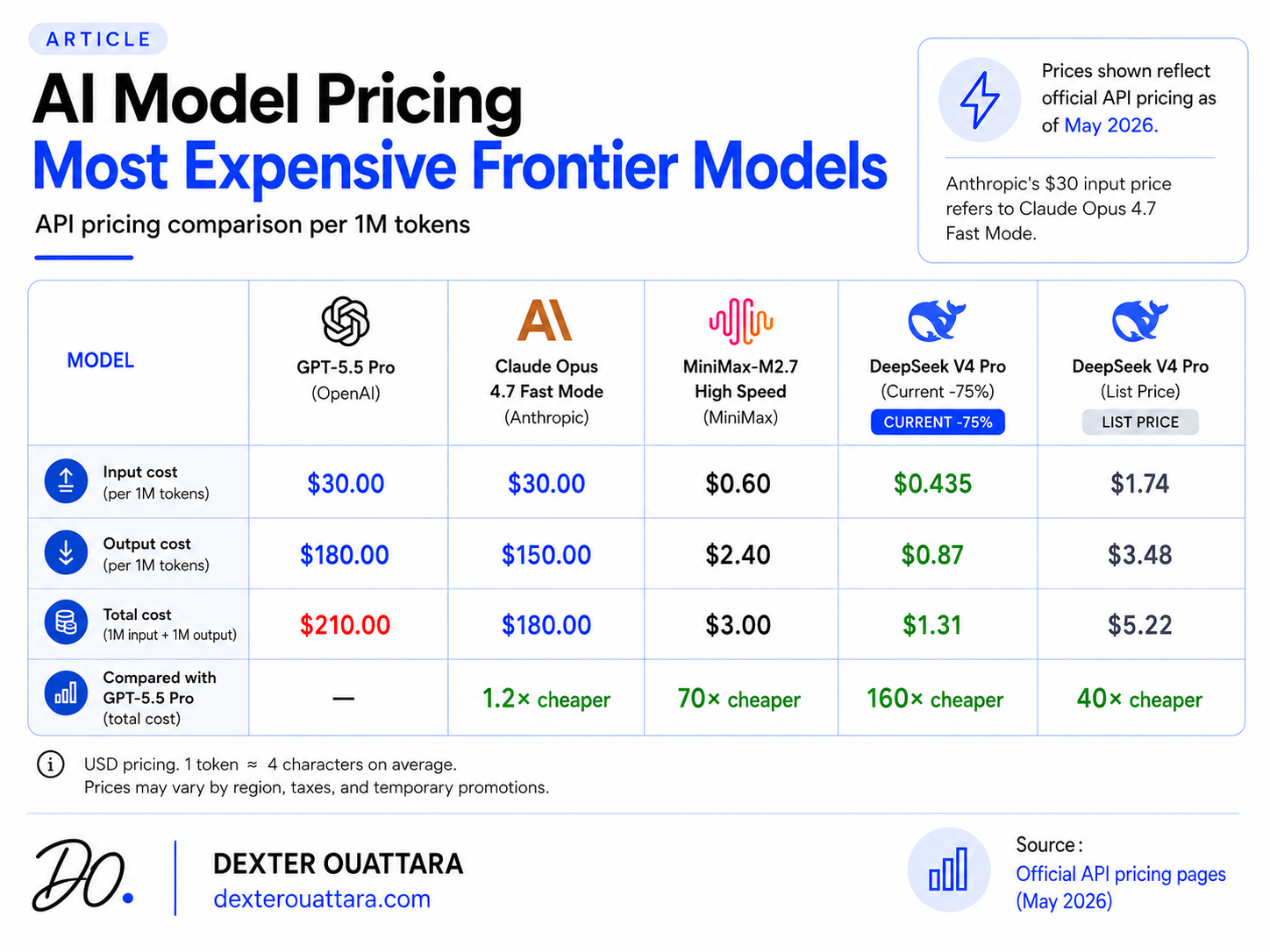
As costs continue to rise, open-source models and Chinese AI models are playing an increasingly strategic role.
Actors such as DeepSeek, MiniMax, Qwen, and others are offering a different approach: powerful models, often much cheaper, with more generous usage limits and a more aggressive quality-to-price ratio.
This is not a minor detail.
For developers on a tight budget, it can make all the difference.
An American frontier model may be excellent for complex tasks: deep reasoning, product architecture, subtle writing, strategic analysis, and high-level decision-making.
But a cheaper Chinese model may be more than enough for many day-to-day tasks: rewriting, simple generation, extraction, summarization, scripts, tests, automation, documentation, assisted search, customer support, or rapid prototyping.
The challenge is not to choose a side.
The challenge is to learn how to use each model where it performs best.
AI Is Also a Geopolitical Issue
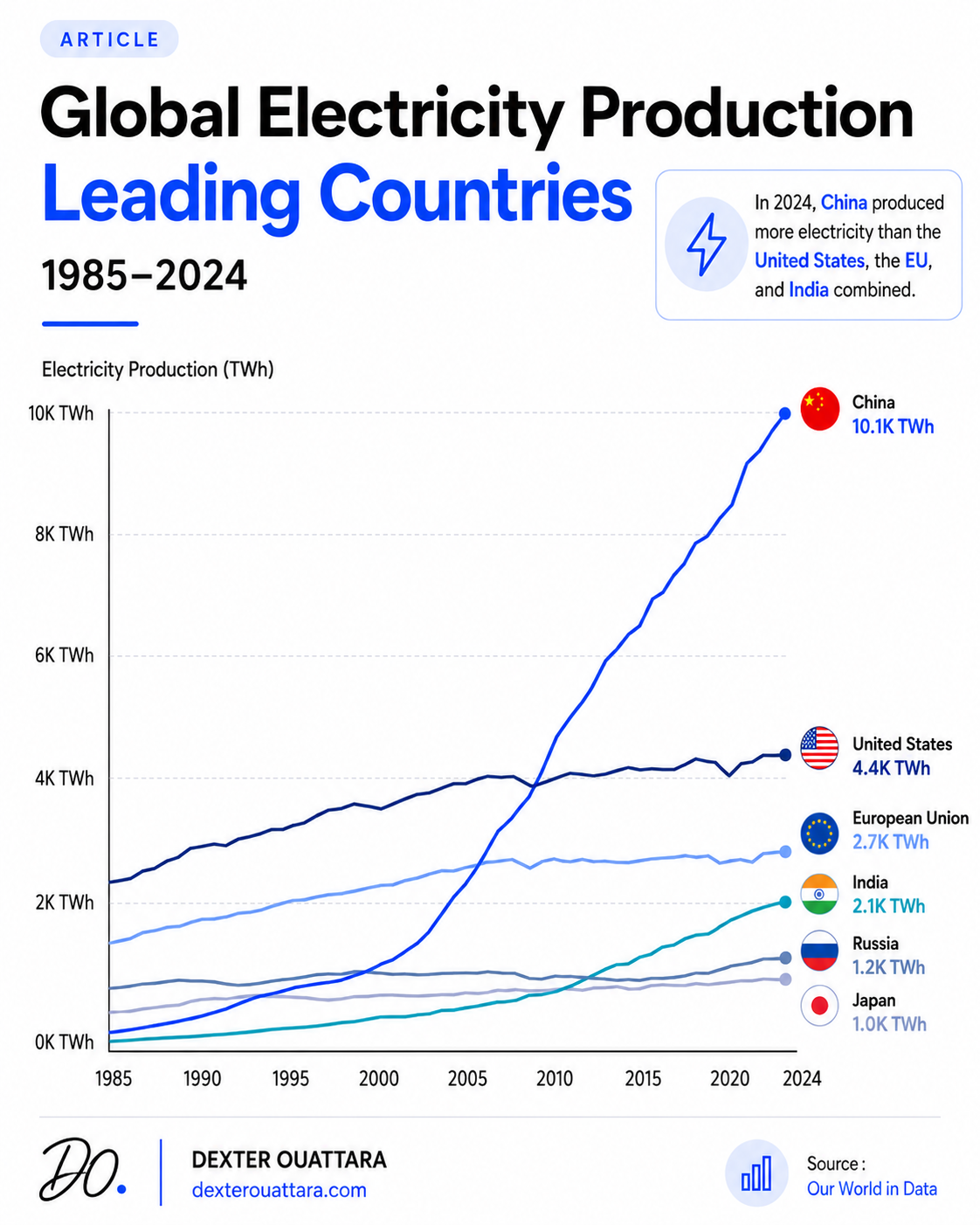
Behind the simple interfaces we use every day, there is a much deeper battle taking place.
The AI race depends on several critical resources:
data centers, electricity, chips, talent, data, cloud infrastructure, and the ability to train or run models at scale.
China has a major advantage in several of these areas, particularly in industrial infrastructure and energy production.
Its current weakness remains access to the most advanced chips, especially those from NVIDIA, a market heavily dominated by the United States.
But this constraint is also pushing Chinese players to innovate differently: optimizing models, reducing inference costs, improving efficiency, developing local hardware alternatives, and building more resource-efficient architectures.
This pressure may directly benefit the rest of the world.
Because when American and Chinese giants compete on performance and price, entrepreneurs in emerging markets recover part of the value.
Prices drop.
Models become more accessible.
Alternatives multiply.
And AI does not remain only in the hands of those who can pay the most.
The Real Risk: AI Reserved for the Wealthiest
The original promise of AI was powerful: to give everyone a lever for productivity, creativity, and execution.
But if access to the best models becomes too expensive, that promise could turn into an illusion.
We could end up in a world where the best-funded startups use the best agents, the best models, the best research tools, and the most advanced automated development environments.
Meanwhile, entrepreneurs in emerging markets would be left with limited versions, weaker quotas, less capable models, and reduced room for experimentation.
That would be a new form of digital divide.
Not only between those who have internet and those who do not.
But between those who have access to cutting-edge artificial intelligence and those who must settle for its most limited versions.
The Strategy for Entrepreneurs Outside the Major Tech Hubs
For African, Indian, Latin American, and other entrepreneurs from less capitalized markets, the solution is not simply to complain about the cost of AI models.
The solution is to become more strategic.
We need to learn how to combine several layers of AI.
Use premium models for tasks that truly require depth: strategic thinking, product architecture, complex reasoning, decision-making, high-quality writing, and market analysis.
Use cheaper or open-source models for repetitive tasks: generating variations, cleaning data, automation, support, simple scripts, summarization, translation, and extraction.
Use local or self-hosted models when possible.
Build hybrid workflows.
Compare costs.
Measure the real quality of outputs.
Avoid depending on a single provider.
In this new economy, the true competitive advantage will not only be knowing how to use AI.
It will be knowing how to orchestrate several AI models intelligently.
Toward AI as a Commodity?
In the long run, AI will probably become a commodity.
Like cloud computing.
Like storage.
Like the internet.
Models will become faster, smaller, cheaper, and more specialized. Part of artificial intelligence will run directly on our computers, phones, or local servers.
The marginal cost of many tasks will continue to decrease.
But before we reach that future, we are going through a critical phase.
A phase where access to the best tools can determine who builds faster, who learns faster, who automates better, and who gets ahead.
And in this phase, inequalities in access to AI are very real.
Conclusion
Artificial intelligence gives the impression that the doors of innovation have been opened to everyone.
But behind this opening lies a new economy, with its own rules, tolls, and invisible barriers.
Tokens have become a resource.
Rate limits have become a strategic constraint.
Premium subscriptions have become a productivity weapon.
And access to the best models is gradually becoming a competitive advantage.
For entrepreneurs in the rest of the world, the battle is not about choosing between American, Chinese, European, or open-source models.
The real battle is about staying free.
Free to choose the right model for the right task.
Free to build without blowing up your budget.
Free not to depend on a single player.
Free to turn AI into leverage, not into a new barrier.
Because if artificial intelligence is truly meant to change the world, it cannot become a luxury reserved for the wealthiest.
It must remain a tool of empowerment for those who build, even far from the major centers of technological power.

Dexter Ouattara
Product Strategy & Entrepreneurship
Want to discuss your product strategy?
Book a consultation to get personalized insights for your business.
BOOK A CONSULTATION